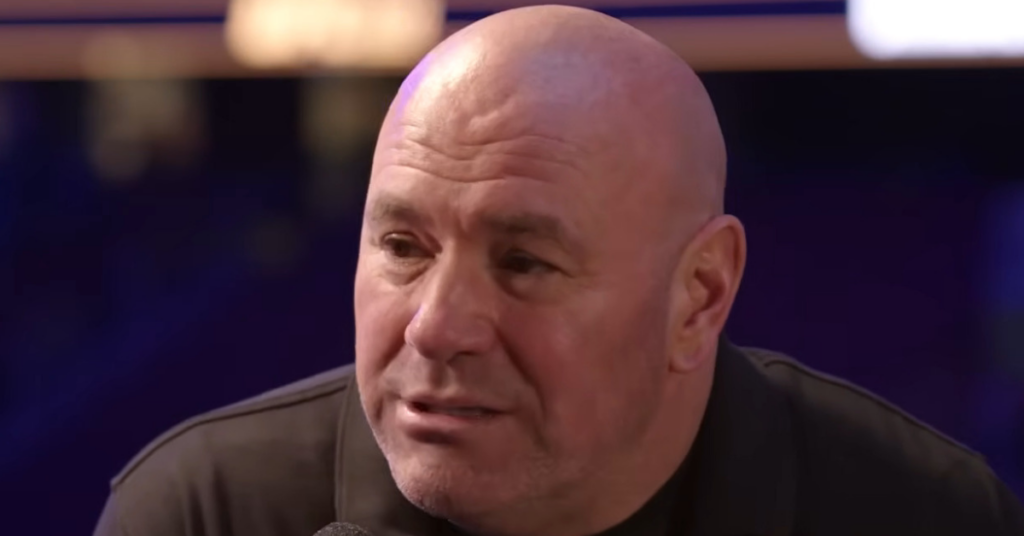


Dana White has made clear that he did not like what Josh Hokit said at UFC Freedom 250. After Hokit beat Derrick Lewis by second-round TKO on the South Lawn of the White House, he used his post-fight interview to repeat the false claim that “Michelle Obama is a man” and asked, “Am I right, America?” The comment landed awkwardly at the event, with reports describing a mix of silence, scattered cheers, and confused reactions from spectators.
White responded in two stages, and both messages carried the same theme. In a text message sent after the event, he said he was “completely against saying nasty and false things about people’s families” and added that he hates “that kind of nonsense,” even while standing by his long-held support for free speech.
Dana White condemns Josh Hokit’s Michelle Obama jab
Days later, while discussing the fallout in a media appearance highlighted by Tomi Lahren, White sounded more frustrated, saying he was trying to “unify the country” that night and Hokit still went out and said “something absolutely stupid.”
UFC Freedom 250 was staged at the White House, with President Donald Trump in attendance, and it was presented as a patriotic event with a huge public watch party on the Ellipse. In that setting, White appears to have wanted the focus on the card, the spectacle, and the symbolism of holding fights at a federal landmark, not on a fighter reviving an old conspiracy theory about a former first lady.
The tension here is familiar if you have followed White for any length of time. He has said before that he does not tell fighters what they can or cannot say, and in an interview before the event he repeated that position, stating, “I never tell people what to say or not to say. Never, ever do it.” He even hinted that trouble was possible when discussing Hokit ahead of the card, noting that the heavyweight had already caused scenes during the promotion of the event.
White’s stance now sits in plain view as he will defend a fighter’s right to speak, but he is not pretending all speech reflects well on the UFC. In this case, he drew a line between allowing expression and endorsing it, and he made sure no one confused the two.